
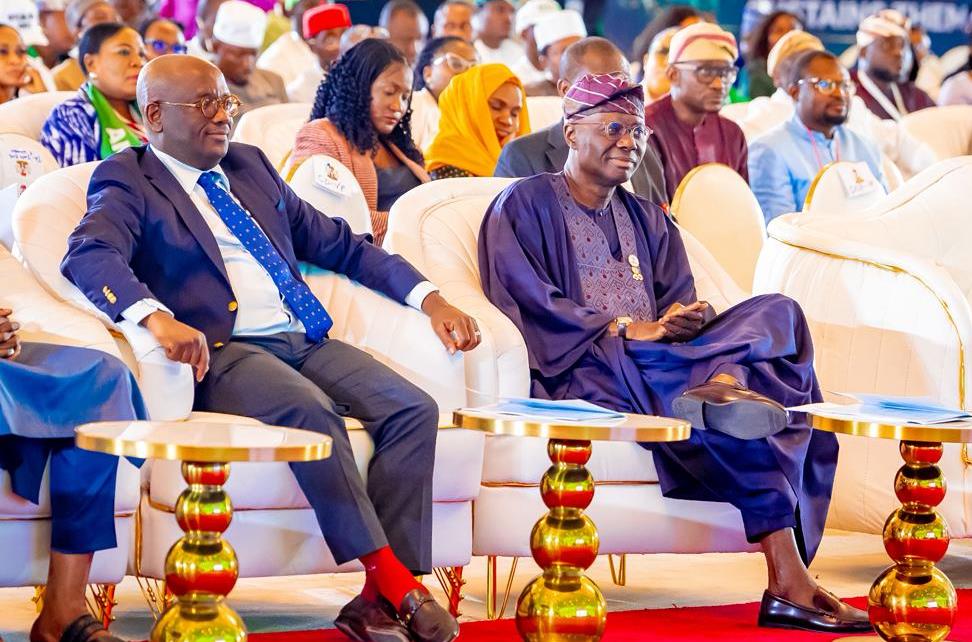
Lagos State Governor, Babajide Sanwo-Olu, has advocated a structured and institutionalised transition of leadership to young people, emphasising the need to deliberately groom the next generation of leaders for national development.
Sanwo-Olu made the call at the 2026 Abuja Dialogue held at the State House Banquet Hall, Presidential Villa, Abuja, where key stakeholders examined the role of youth in leadership and governance.
Vice President, Kashim Shettima, in his remarks, stressed that young people must be intentionally guided through leadership, warning that failure to do so could weaken national institutions.
The high-level forum, organised by the Office of the Vice President in collaboration with the Lateef Jakande Leadership Academy, focused on the theme: “Scaling Excellence: Youth Leadership as Strategic Infrastructure for National Transformation.”
Shettima noted that youth leadership should go beyond ceremonial inclusion, advocating a structured system that prepares, integrates, and supports young people within governance institutions.
According to him, building a reliable leadership pipeline is essential for sustaining national progress, adding that preparing young people with outdated frameworks would undermine future governance.
“Leadership is not defined by age but by readiness, discipline, and the ability to prioritise the common good,” the Vice President stated.
Sanwo-Olu, on his part, said the debate about the relevance of youth in leadership had been settled, stressing that the real challenge lies in building systems and institutions capable of harnessing youthful energy for national transformation.
He highlighted Lagos State’s commitment to youth development, noting that leadership development is treated as critical infrastructure, alongside investments in roads, housing, healthcare, and transportation.
The Governor warned that failure to equip young people with leadership skills could result in economic setbacks and increased brain drain, depriving the country of valuable talent.
He added that the Lateef Jakande Leadership Academy was established to bridge gaps in the leadership ecosystem by providing structured training, mentorship, and real-life governance exposure.
Also speaking, the Minister of Youth Development, Ayodele Olawande, led youth groups and emerging leaders to the event, alongside top government officials, development experts, and members of academia.
Executive Secretary of the Academy, Ayisat Agbaje-Okunade, said the dialogue was convened to address barriers to youth leadership transition, stressing that leadership development requires deliberate nurturing through mentorship, exposure, and practical experience.
She maintained that integrating young people into real decision-making environments is key to building competent and future-ready leaders capable of driving sustainable development.