
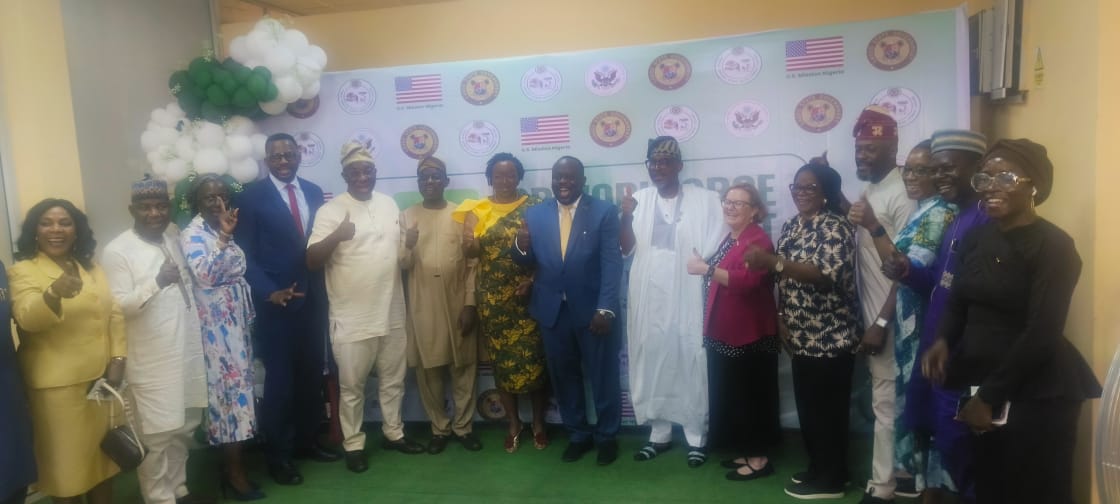
The Lagos State Government has called on public servants to embrace artificial intelligence and other digital skills to enhance efficiency, drive innovation, and improve service delivery across government institutions.
The Honourable Commissioner for Establishments and Training, Mr. Afolabi Ayantayo, made the call at a capacity-building session organised by the Public Service Staff Development Centre, themed *“Workforce Development: Staff Upskilling, Policy Formulation and Implementation.”*
Ayantayo noted that Artificial Intelligence is already reshaping how governments plan, analyse data, deliver services, and make critical decisions. He stressed that while AI presents enormous opportunities for improved governance, its true value depends largely on the ability of public officers to understand, adapt, and deploy the technology responsibly and ethically.
He commended the Centre for organising the training at a time when technological advancement is redefining the global workplace. According to him, the Lagos State Government remains committed to continuous learning, structured capacity building, and the integration of innovation into public service systems to ensure optimal performance.
The Commissioner also disclosed that the Lagos State Ministry of Innovation, Science and Technology is developing platforms designed to promote creativity and technological advancement, particularly among young people, as part of the state’s broader digital transformation agenda.
In his welcome address, the Director-General of the Public Service Staff Development Centre, Kunmi Adio-Moses, described the engagement as the beginning of deeper strategic partnerships aimed at strengthening digital competencies and positioning the Lagos State Public Service for the future of work.
Adio-Moses added that sustained collaboration with international experts would enhance knowledge exchange and accelerate the implementation of the state’s digital transformation objectives.
The session featured U.S.-based AI expert, Omoju Miller, who provided insights into how artificial intelligence can improve governance, particularly in healthcare delivery and access to public information. She explained that AI-powered tools such as chatbots and telemedicine platforms can help bridge gaps in healthcare services by providing instant medical information, streamlining processes, and reducing hospital waiting times.
The event attracted key stakeholders from various ministries, departments, and agencies, alongside senior government officials, underscoring the state’s commitment to building a future-ready public service anchored on innovation and digital excellence.