
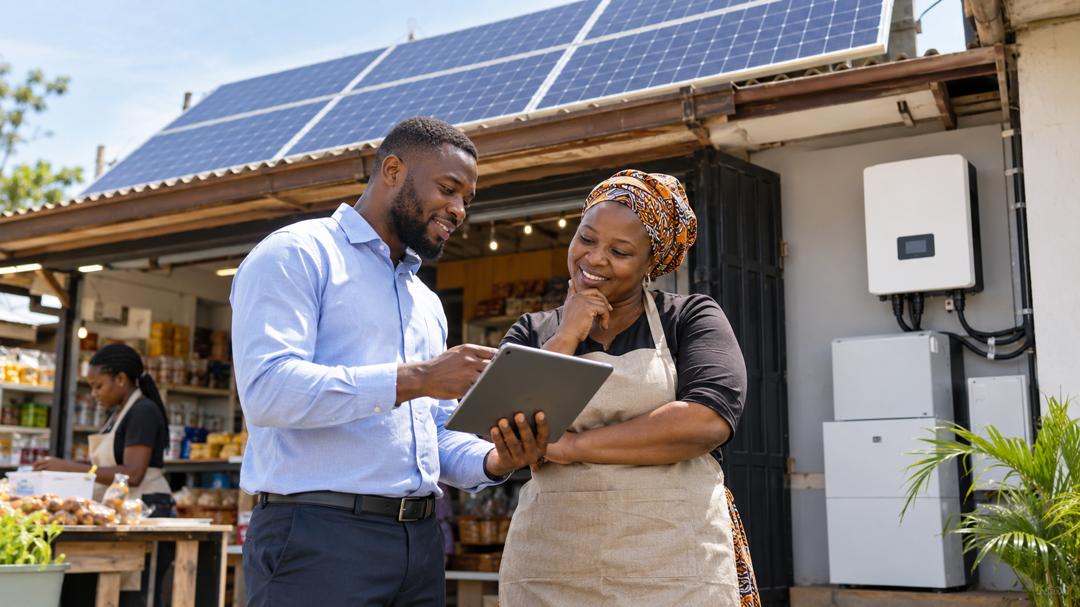
Small and medium-sized businesses in Nigeria are being encouraged to explore renewable energy solutions as rising electricity costs and unreliable power supply continue to affect business operations and productivity.
Fidelity Bank's Green Financing initiative is providing eligible individuals and businesses with financing options to acquire solar panels, inverters, batteries and other clean energy assets.
The initiative comes amid growing concerns over the cost of electricity, frequent grid disruptions and the financial burden of operating petrol and diesel generators.
For many small businesses, the cost of power extends beyond electricity bills to include fuel purchases, generator maintenance, replacement parts and losses resulting from interrupted operations.
According to the World Bank, more than 80 million Nigerians, representing nearly 40 per cent of the population, lacked access to electricity as of 2025.
Although generators and inverters remain common alternatives, solar energy is increasingly attracting businesses seeking more reliable and predictable power supply.
However, the initial cost of installing solar systems remains a major obstacle for many small business owners.
Fidelity Bank Green Financing seeks to address this challenge by allowing eligible customers to spread the cost of acquiring renewable energy equipment rather than paying the full amount upfront.
The financing option could help businesses reduce their dependence on generators, maintain operations during power outages and manage energy expenses more effectively.
For businesses such as restaurants, pharmacies, salons and small manufacturing companies, reliable electricity is essential for daily operations.
Power interruptions can lead to spoiled goods, disrupted production, cancelled appointments and loss of customers.
Proper assessment of energy requirements is also important when adopting solar solutions. Businesses need to consider their electricity consumption, operating hours and essential equipment to ensure the installed system meets their needs without unnecessary costs.
Beyond businesses, households can also benefit from renewable energy through improved access to electricity for lighting, refrigeration, remote work and learning.
The growing demand for alternative energy solutions has also increased the role of financial institutions in supporting Nigeria's energy transition by making clean energy investments more accessible.
Through its Green Financing initiative, Fidelity Bank is seeking to support eligible customers in adopting renewable energy systems while improving business efficiency and reducing dependence on conventional power sources.
The initiative highlights the potential of green financing to address electricity challenges, support small business productivity and encourage the adoption of cleaner energy solutions across Nigeria.