Lagos State has been ranked among the top 10 performing states in Nigeria’s ease of doing business, alongside Kaduna, Oyo, the Federal Capital Territory (FCT), Ogun, Enugu, Plateau, Ekiti, Kano, and Nasarawa, according to the 2025 Subnational Ease of Doing Business Report.
The report indicates that states implementing sustained reforms have recorded significant improvements, including up to 40 per cent reduction in business registration timelines, over 30 per cent improvement in land administration efficiency, as well as notable advancements in digital service delivery and dispute resolution mechanisms.
The Director-General of the Presidential Enabling Business Environment Council (PEBEC), Princess Zahrah Mustapha Audu, announced the rankings at a roundtable in Abuja with members of the diplomatic community and strategic partners. She noted that the results reflect measurable progress across states, signaling improved transparency, predictability, and competitiveness for investors.
She added that reforms must translate into tangible outcomes, including faster permitting processes and clearer regulatory frameworks, stressing that capital tends to flow where there is greater certainty.
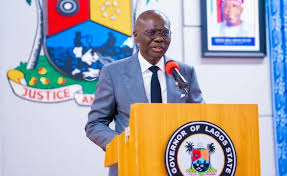
Lagos State Governor, Mr. Babajide Sanwo-Olu, described the ranking as a reflection of deliberate government efforts to create a favourable business environment that supports both local and foreign investments. He reaffirmed the state’s commitment to sustaining reforms that promote economic growth and ensure good returns for investors.
Representing the Governor, the Commissioner for Commerce, Cooperatives, Trade and Investment, Mrs. Folashade Bada, said Lagos’ position among top performers is not accidental but the result of institutional reforms, policy consistency, and sustained economic planning.
She noted that Lagos contributes more than 30 per cent of Nigeria’s Gross Domestic Product and accounts for over 60 per cent of the nation’s commercial and industrial activities. According to her, the state’s long-term development framework, anchored on the Lagos State Development Plan 2052, is designed to ensure continuity in economic transformation.
Bada also highlighted the forthcoming Lagos State Industrial Policy (2025–2030), which aims to promote a production-driven and export-oriented economy. She explained that reforms in land administration, construction permits, and tax systems have improved transparency and reduced bureaucratic delays.
She further disclosed that digital platforms introduced by government agencies have enhanced efficiency, with low-risk construction permits now processed within 15 working days. Lagos has also invested in infrastructure such as fibre-optic networks, transport systems, and logistics to support economic activities and attract investors.
Stakeholders at the event, including the Minister of Budget and Economic Planning, Senator Abubakar Bagudu, emphasized that Nigeria’s ambition of building a $1 trillion economy will depend significantly on the role of states and the private sector in driving reforms and investment growth.
The Presidential Enabling Business Environment Council continues to focus on improving regulatory coordination, enhancing service delivery through digital platforms such as ReportGov, and deepening reforms at the subnational level to further strengthen Nigeria’s business environment.