
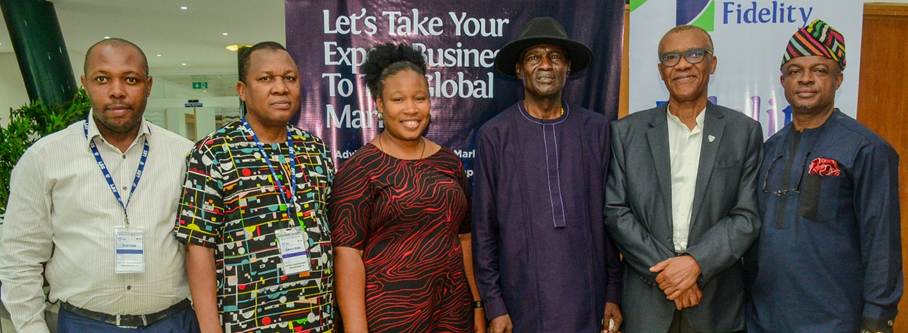
Fidelity Bank Plc has strengthened its commitment to Nigeria’s economic diversification drive by equipping exporters and entrepreneurs with the skills needed to take advantage of opportunities under the African Continental Free Trade Area (AfCFTA).
The bank recently hosted the 19th edition of its Export Management Programme (EMP 19) at the Lagos Business School (LBS), Ajah, Lagos, bringing together entrepreneurs, professionals, regulators and aspiring exporters for intensive export management training.
The programme, organised in partnership with Lagos Business School and the Nigerian Export Promotion Council (NEPC), focused on enhancing participants’ knowledge of export processes, market access strategies, international trade requirements and opportunities across African markets.
Speaking at the closing ceremony, Fidelity Bank’s Divisional Head, Export and Agriculture, Isaiah Ndukwe, said the initiative was designed to prepare Nigerian businesses to compete effectively in regional and global markets.
According to him, capacity building remains critical to unlocking Nigeria’s export potential and expanding the country’s non-oil export sector.
“Through the Export Management Programme, we are equipping businesses with practical knowledge, market intelligence and strategic insights required to compete successfully in regional and global markets,” he said.
Ndukwe noted that the implementation of AfCFTA presents significant opportunities for Nigerian exporters and stressed the importance of preparing businesses to take advantage of the continent-wide trade agreement.
He added that Fidelity Bank would continue to provide exporters with financial solutions, advisory services and strategic partnerships needed to scale their operations beyond Nigeria.
Also speaking, Director of the Export Management Programme at Lagos Business School, Professor Frank Ojadi, highlighted the need for continuous training and capacity development in response to changing dynamics in global trade.
He explained that the programme placed strong emphasis on AfCFTA, providing participants with practical insights into accessing new markets and navigating the evolving trade environment.
“Many businesses are still learning how to take advantage of AfCFTA. Through this programme, participants gained practical insights that will help them navigate opportunities across African markets and beyond,” Ojadi said.
Senior Fellow and Head of the Department of Organisational Behaviour and Human Resources Management at Lagos Business School, Dr. Uche Attoh, underscored the importance of negotiation and dispute resolution skills in international business transactions.
He said understanding negotiation and arbitration principles would enable participants to manage business relationships effectively and resolve trade-related disputes across different markets.
Participants described the training as practical and impactful.
Assistant Director at the Nigerian Shippers’ Council, Obinna Oforum, said the programme strengthened his determination to champion export development, while Chief Superintendent of Customs, Orji Samuel, commended Fidelity Bank and Lagos Business School for making the training accessible and relevant to participants.
The Export Management Programme is Fidelity Bank’s flagship export development initiative aimed at building export-ready businesses and professionals capable of driving Nigeria’s non-oil export growth.
Through strategic partnerships and targeted interventions, the bank continues to support trade facilitation, business expansion and economic development while helping Nigerian enterprises position themselves for opportunities under the African Continental Free Trade Area.