
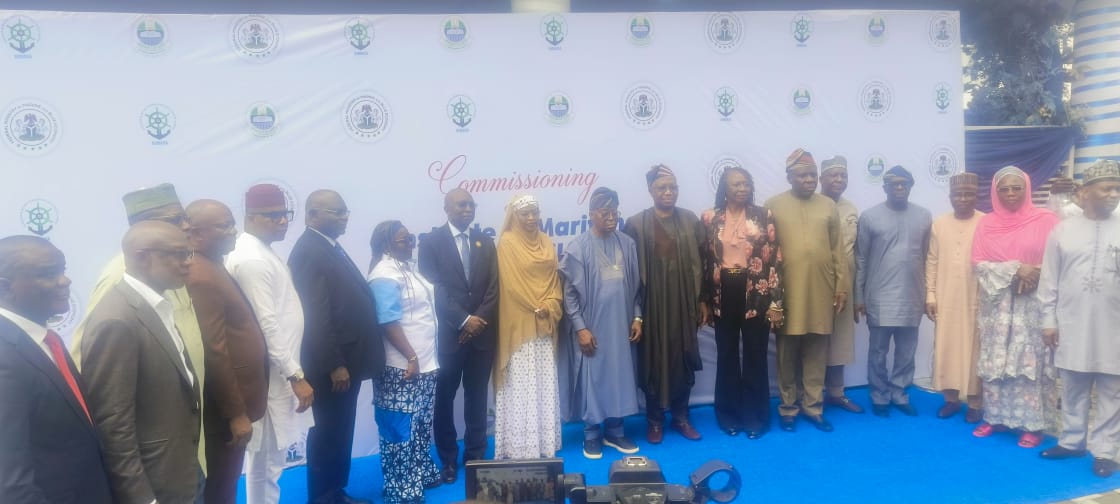
The Minister of Marine and Blue Economy, Adegboyega Oyetola, says Nigeria’s maritime sector remains a key driver of national development, with over 90 percent of the country’s trade carried out through the sea.
He made this known at the commissioning of the NIMASA–University of Lagos Institute of Maritime Studies multi-purpose building, describing the project as a major investment in human capital and a step toward enhancing Nigeria’s maritime competitiveness.
Oyetola said the future of the sector depends not only on infrastructure and policies, but also on skilled manpower, innovation, and collaboration. He disclosed that over 3,000 young Nigerians have been sponsored for overseas training under the Nigerian Seafarers Development Programme, with more than 1,000 already certified to contribute to the industry.
The Director-General of the Nigerian Maritime Administration and Safety Agency (NIMASA), Dayo Mobereola, said the project marks a significant milestone in strengthening the maritime sector. He described it as evidence of the agency’s commitment to capacity development, training, and research in line with the NIMASA Act of 2007.
Mobereola noted that human capital remains central to industry growth, adding that NIMASA has continued to partner with institutions such as the University of Lagos, the World Maritime University, and the International Maritime Law Institute to bridge manpower gaps.
He further stated that through the Nigerian Seafarers Development Programme, the agency has trained thousands of cadets to support the industry’s workforce needs.
The Vice-Chancellor of the University of Lagos, Folasade Ogunsola, said the newly commissioned facility will strengthen Nigeria’s blue economy by improving training, research, and manpower development in the maritime sector.
She added that the institute has already trained over 2,000 students and will continue to support industry growth through specialised programmes, while commending the Federal Government and NIMASA for their support and expressing optimism about the completion of future phases of the project.